

Electric Vehicle–Grid Interaction Technologies for the Low-Carbon Energy Transition
车网互动技术与应用
With the global acceleration of the low-carbon energy transition, the large-scale integration of renewable energy and electric vehicles (EVs) is profoundly reshaping modern power systems. Electric vehicles are no longer merely flexible loads; they are gradually evolving into mobile energy storage units and active participants in power system operation. The interaction between EVs and the power grid, commonly referred to as EV–grid interaction or vehicle-to-grid (V2G), has become a key enabling technology for enhancing renewable energy utilization, improving grid flexibility, and reducing carbon emissions.
This session focuses on the following topics:
1. Smart Charging and Coordinated EV Charging Control;
2. EV Aggregation and Virtual Energy Storage Systems;
3. Predictive Control and Optimization for EV–Grid Interaction;
4. Uncertainty Modeling and Scenario-Based Energy Management of EVs;
5. EV–Grid Interaction in Microgrids and Multi-Microgrid Systems;
6. Coordinated Operation of EVs and Renewable Energy;
7. Grid Support Services and Carbon Reduction Potential of EVs.
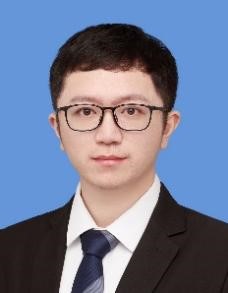 |
Chuanshen Wu, Hohai University 吴传申,河海大学 |
 |
Tao Qian, Southeast University 钱涛,东南大学 |
Chuanshen Wu is an Associate Researcher at the College of Energy and Electrical Engineering, Hohai University. He received his Ph.D. degree from Southeast University in 2022. From 2022 to 2025, he worked as a Research Associate at the School of Engineering, Cardiff University, UK. In the past five years, he has published over 10 SCI-indexed papers as the first author, including IEEE Transactions and Applied Energy. He has also led multiple research projects, including one project funded by the National Natural Science Foundation of China, as well as several science and technology projects supported by State Grid Jiangsu Electric Power Co., Ltd. His research interests focus on electric vehicles and their interaction with power grids. |
Tao Qian is a Lecturer at the School of Electrical Engineering, Southeast University. He also serves as the Deputy Director of the Electric Transportation Systems Division. His research interests focus on the integrated interaction between power systems and electrified transportation. He has led and participated in multiple research projects, including those funded by the National Natural Science Foundation of China and sub-projects of the National Key Research and Development Program of China. He has published more than 30 papers in high-impact journals such as IEEE Transactions, Applied Energy (APEN), and Proceedings of the CSEE. Among these, three papers are recognized as ESI Highly Cited Papers. He holds eight authorized invention patents. His honors include the Outstanding Doctoral Dissertation Award from Xi’an Jiaotong University, the First Prize of the Electric Power Science and Technology Progress Award (2025), and the Best Paper Award at the IEEE EI2 International Conference in 2023 and 2024.
|
||
 |
Kecheng He, Lanzhou Jiaotong University 何克成,兰州交通大学 |
 |
Qiang Xing, Nanjing University of Posts and Telecommunications 邢强,南京邮电大学 |
Kecheng He (Member, IEEE) received the Ph.D. degree in Electrical Engineering from Tianjin University, Tianjin, China, in 2025. From 2024 to 2025, he was an Assistant Researcher at the School of Engineering, Cardiff University, Cardiff, U.K., where he participated in collaborative research on smart transportation and energy systems. He is currently an Associate Professor with Lanzhou Jiaotong University, China. His research interests include electric vehicle charging infrastructure planning, mobile energy supply systems, and the modeling and optimization of integrated transportation–energy networks.
|
Xing Qiang received the Ph.D. degree in electrical engineering from Southeast University, Nanjing, China, in 2022. From 2021 to 2022, he was a joint Ph.D. student with Nanyang Technological University, Singapore. Dr. Xing is currently an assistant professor at the School of Automation at Nanjing University of Posts and Telecommunications. His main research interests include the integration of electric vehicles with transportation-electrification networks and the artificial intelligence technology for energy system operation applications. |
||
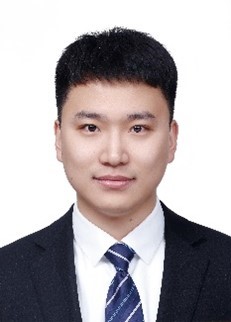 |
He Meng, Hebei University of Technology 孟赫,河北工业大学 |
||
He Meng received the Ph.D. degree in electrical engineering from Tianjin University, Tianjin, China, in 2025. From 2023 to 2024, he was a Visiting Research Assistant with the School of Engineering, Cardiff University, Cardiff, U.K., where he conducted collaborative research on the operational optimization and market mechanism design of mobile and shared energy storage systems. He is currently a Lecturer with the School of Electrical Engineering, Hebei University of Technology, China. His research interests include path planning for mobile energy storage, trading mechanisms for shared energy storage, and the optimal operation of virtual power plants. |
|||
Copyright © All Rights Reserved, The 10th International Conference on Electrical Engineering and Green Energy