

Advanced Permanent Magnet Motor Systems: Innovations in Design, Control, and Industrial Electrification
电机控制与应用
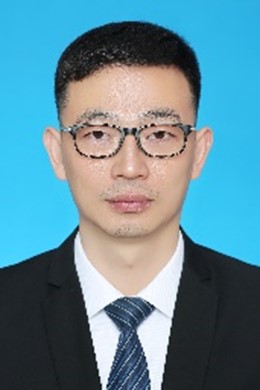 |
Tao Tao, Jiangsu University 陶涛,江苏大学 |
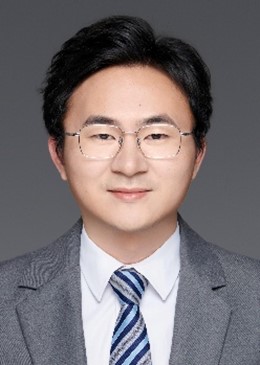 |
Kaikai Diao, Anhui University 刁凯凯,安徽大学 |
Tao Tao Ph.D. degree in electrical engineering from Jiangsu University, Zhenjiang, China, in 2020. He has been with Jiangsu University since 2021, where he is currently an Associate Professor with the School of Electrical Information Engineering. His research interests include the modeling, control, and fault-tolerant operation of multiphase permanent-magnet machines. |
Kaikai Diao (Member, IEEE) received the Ph.D. degree in vehicle engineering from Jiangsu University, Zhenjiang, China, in 2023. From 2021 to 2023, he was a visiting Ph.D. student with the Institute of Electrical Drives and Power Electronics at Johannes Kepler University Linz, Austria. He is currently a Lecturer with the School of Electrical Engineering and Automation, Anhui University. His research focuses on the design, modeling, optimization, and control of electrical machines and drive systems.
He has authored one academic monograph published by Springer Nature and has published over 30 papers, including 5 ESI highly cited papers. His work has accumulated more than 1,400 citations, resulting in an H-index of 18 (2025). According to the ranking of Stanford University and Elsevier from 2023 to 2025, Kaikai Diao is listed within the top 2% researchers worldwide. |
||
 |
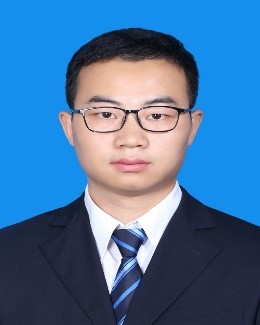
Donghui Cao, Nanyang Technological University, Singapore 曹东辉,新加坡南洋理工大学 |
 |
Ling Ding, Zhengzhou Research Institute of Harbin Institute of Technology 丁岭,哈尔滨工业大学郑州研究院 |
Donghui Cao received the B.Eng. in 2018, and the Ph.D. degree in 2023 in electrical engineering from Jiangsu University, Zhenjiang, China. He was sponsored to study in Newcastle University, UK, by China Scholarship Council project from 2021.12-2022.12
He is currently a Postdoctoral Research Fellow with the school of electrical and electronic engineering, Nanyang Technological University, Singapore.
His current research interests include high-performance design, electromagnetic field computation and thermal analysis for permanent magnet machine.
|
Ling Ding, associate researcher, currently employed at the Zhengzhou Research Institute of Harbin Institute of Technology. Mainly engaged in research of design and optimization theories and methods of permanent magnet synchronous motors, such as magnetic equivalent network modeling and analysis of permanent magnet synchronous motors, multi-objective and robust optimization method of permanent magnet synchronous motors of electric vehicles and hybrid EVs. He has published over 20 academic papers. |
||
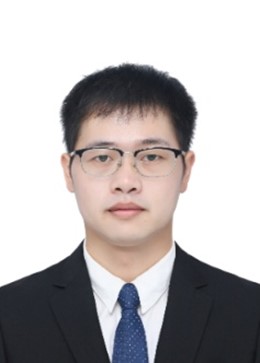 |
Xianqun Qiu, Yangzhou University 邱先群,扬州大学 |
||
Xianqun Qiu received the B.Sc. degree in automation and the M.Sc., Ph.D. degrees in electrical engineering from Jiangsu University, Zhenjiang, China, in 2014, 2017, and 2022, respectively. From 2020 to 2021, he was a Guest Ph.D. Student with the AAU Energy, Aalborg University, Denmark. Since 2023, he has been with Yangzhou University, where he is currently a Lecturer with the College of Electrical, Energy and Power Engineering.
His research interests include control of permanent-magnet machines and sensorless drive.
|
|||
Copyright © All Rights Reserved, The 10th International Conference on Electrical Engineering and Green Energy